

Books have a way of inspiring you to think and stoking your imagination as no other medium does. Reading forces the brain to process new thoughts, feelings, and experiences, motivating it to imagine scenes it could not construct before. Some of the best literary works to inspire you to think and empathize are the classics.
These works are classics for a very good reason. They are incredibly well-written, quite insightful, and often critical of society’s structures. They wrestle with deep questions like morality, duty, racism, and legacy. It’s why they make some of the best book adaptations to movies and TV shows. It is also why these specific works are on our list of must-read classics for every book aficionado.
Le Père Goirot
Le Père Goirot is one of the most underrated classic works, in our opinion. French novelist and playwright, Honoré de Balzac, published in 1835, though the events in the book occur in 1819. This novel is a true testament to Balzac’s dedication to realism, as he uses the most minute details, such as the condition of the window glass, to immerse you in the world.
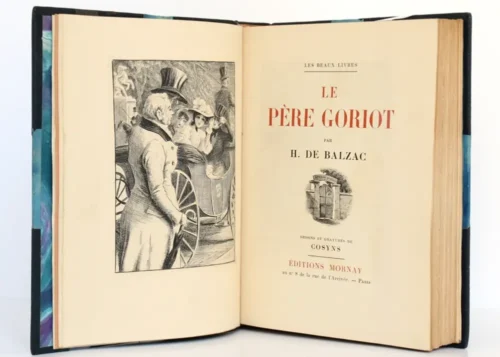
Le Pere Goriot tells the story of Eugène de Rastignac, Vautrin, and Jean-Joachim Goriot, all of whom live in a boarding house. Their stories are intertwined, as Rastignac aims to get closer to one of Goirot’s daughters, while Vautrin, the criminal, tries to convince Rastignac to scheme his way into wealth. This novel is a harsh criticism of the machinations of high society, but also of the institutions of family and marriage. When Goirot dies, only Rastignac, Christophe the servant, and two paid mourners attend. It is a sad indictment of the values high society members held.
To Kill a Mockingbird
To Kill a Mockingbird is one of the most impactful novels of all time, especially in American literature. It’s a Southern Gothic novel that examines themes of racial injustice, classism, Southern life, gender roles, and compassion. The writer, Harper Lee, grew up in the Deep South, in Alabama, born in 1926, so she witnessed the irrationality of racism and classism in the Deep South.
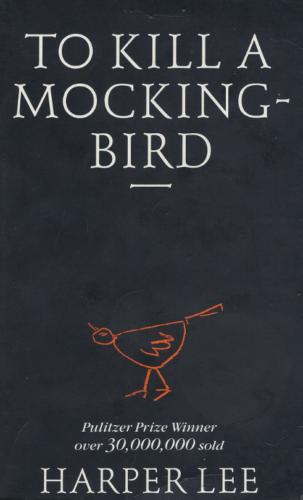
You get to experience the story from the point of view of Jean Louise Finch, affectionately dubbed Scout, who is 6 years old at the start of the book. She lives with her older brother Jem, lawyer father Atticus, and cook Calpurnia, who is a black woman. Since the court assigns Atticus the case of Tom Robinson, a black man accused of raping a young white woman. Despite proving his innocence, Atticus fails to protect Tom from a guilty verdict, and he gets murdered while allegedly attempting to escape from prison. This novel is a very insightful look into the deep South’s racial dynamics through the eyes of innocent children.
Crime and Punishment
Crime and Punishment is undoubtedly the magnum opus of Fyodor Dostoevsky’s writing career. This novel, published in 1866 across twelve installments, sounds like a book of detective fiction. And in a way it is. It tells the story of Raskolnikov, who is the novel’s protagonist, but he is by no means a hero. Young Raskolnikov, a failed law student, is living in abject poverty in Saint Petersburg.

He feels powerless in his own life due to his financial situation, so he starts considering murdering a pawn broker. The pawn broker is an old lady whom he murders with an axe. This murder occurs at the end of the first part of the novel. The next five parts consist of him agonizing over his crime, battling with his internal guilt to the point of delirium. Ultimately, Raskolnikov confesses, but only receives 8 years of penal servitude. This story deals with themes of rationalism and utilitarianism, with nihilism as the main starting point. It analyzes the guilt conscience and the power of poverty to drive people to do immoral acts. It’s why it is one of our must-read classics for every book aficionado.
Leave a Reply